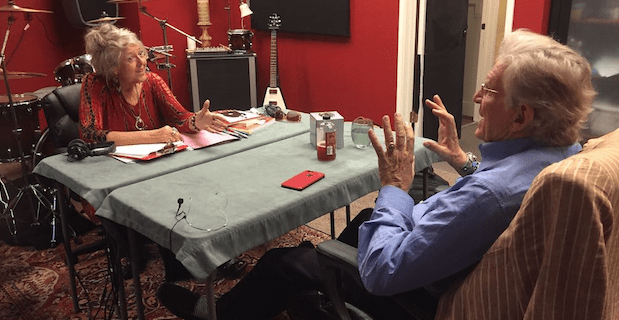
Here is a special tribute to Robert Thurman, PhD (1941–2026), renowned scholar of Indo-Tibetan Buddhist studies, longtime professor at Columbia University, and cofounder and president of Tibet House, an organization dedicated to serving His Holiness the Dalai Lama and the people of Tibet. A close friend of the Dalai Lama for more than fifty years, Thurman was also a passionate advocate for Tibetan rights and cultural preservation. While the Chinese invasion of Tibet in 1959 brought profound devastation to Tibetan culture, Thurman emphasized what he saw as its hidden legacy: the global spread of Buddhist wisdom and compassion. In these four specially selected archival recordings, he reflects on that legacy and explores enlightenment as a lived, daily practice. Thurman speaks of love as the most powerful force in the universe—the binding energy that connects all beings. He also reminds us that meditation is not meant to withdraw us from the world’s suffering, but to awaken us to our deep interconnection with others and inspire compassionate action.

More than 1.3 million Tibetans died and over 6,000 monasteries were destroyed after China’s 1959 invasion. Yet this tragedy released Tibetan Buddhist wisdom long hidden in the Himalayas. Robert Thurman says it speaks to our modern crisis of meaning and could spark a global renaissance if we recognize the limits of materialism. Read more »
What if leaders had to embody compassion? Why is generosity so hard? Can consciousness shift from “something” to “nothing”? Robert Thurman brings Buddhist wisdom into modern life, offering practical insight—drawn from decades with the Dalai Lama—on finding meaning, compassion, and joy amid everyday struggles. Read more »
The Dalai Lama – Choosing Love Toward Our EnemiesHere we explore how we can abide in equanimity with the displays of hatred and polarization in these most challenging times. There is one person who models for us the highest form of radical peace, His Holiness the Dalai Lama. In this dialogue we explore how we, too, may embody peace and nonviolence as we find peace within ourselves and with the world. Read more »
Buddhism is not a religion but is an engagement with “real” reality. The entire Buddhist tradition is built on a philosophical scientific foundation. The Buddha was more a scientist than a religious teacher. Here we explore how we can tap into “real” reality by removing the veils of ignorance and make our life count with evolutionary skill. Read more »