
In 2000, the physicist Freeman Dyson was awarded the Templeton Prize, which honors a living person who has made an exceptional contribution to affirming life’s spiritual dimension, whether through insight, discovery, or practical works. Dyson (1923–2020) was a physicist, a mathematician, and Professor Emeritus at the Institute for Advanced Study in Princeton, New Jersey. His writings on the meaning of science and its relation to other disciplines, especially religion and ethics, challenge humankind to reconcile technology and social justice.
Michael Toms (my late husband and co-founder of New Dimensions Radio) and I were invited to attend the award ceremony in Washington, DC.
At the time, our two grandchildren, twelve-year-old Jeremy and nine-year-old Meghan, lived nearby. Michael had grown up in the area, so we decided to use the occasion to take them on a tour of some of Washington’s monuments. One building was at the top of Michael’s list: the Library of Congress. Its original collection burned in 1814, when British troops set fire to the Capitol, and was restocked with books from Thomas Jefferson’s personal library. As a student at Gonzaga College High School, Michael had made the Library a favorite place to do research. He often spoke with nostalgia of the hours he spent in the Main Reading Room asking for books to be brought to him, especially those on James Boswell, the biographer of Samuel Johnson. Johnson is best known for his Dictionary of the English Language, the first great authoritative English dictionary, and many consider Boswell’s Life of Samuel Johnson the greatest biographywritten in English. Michael was fascinated with Boswell.
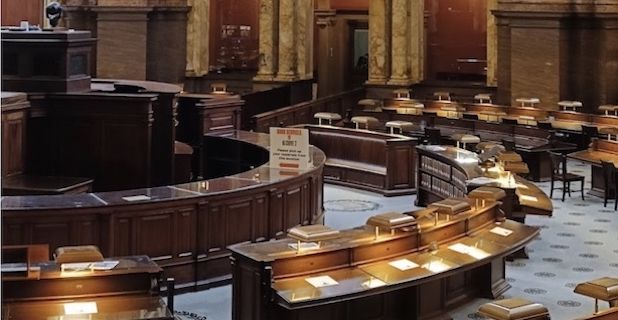
Since parking was scarce, Michael dropped us off, and I took the children into the library on my own. The first thing we did was find the balcony overlooking the great domed reading room, filled with desks, counters, and rolling book carts. It was an anthill of people busy at work. I was filled with pride to tell the children that this was the library their grandfather had used when he was in high school.
Then we headed for the elevator to go down to the library store and the exit. The children begged to take the stairs instead. I finally gave in and agreed to meet them in the gift shop.
I waited, and waited, and waited. My anxiety rose with each passing minute as I imagined all sorts of terrible things that could have happened to them. Finally, to my great relief, they showed up flushed and extremely excited. They had found an exhibit from the movie The Wizard of Oz, and they described the famous, magical ruby slippers in vivid detail. Then they confessed that they had gotten lost trying to find their way back through the passageways to the lower level.
They didn’t find the slippers despite getting lost. They found them because they got lost. The elevator would have carried them straight to the gift shop, safe and on schedule. The stairs let them wander, and wandering is where wonder lives. It feels fitting that the slippers were Dorothy’s. She, too, had to be swept far from home, lost in a strange land with no map, before she discovered the magic she had been wearing all along.


